
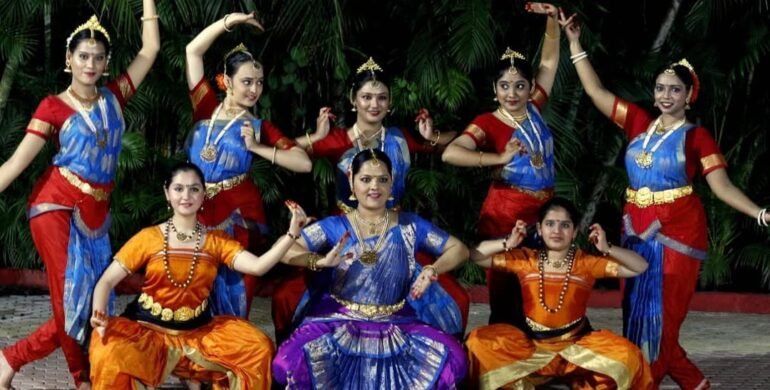
In Indian tradition, Nritya is not merely a performing art—it is a sacred offering. From ancient temple rituals to classical stage performances, dance has always been deeply connected with Bhakti, the path of devotion. When movements are guided by faith and surrender, dance transcends entertainment and becomes a form of worship.
At Nritya Bhakti Foundation, we believe that every gesture (mudra), expression (abhinaya), and rhythm (tala) is a prayer. Classical and devotional dance forms were created to narrate stories from scriptures, express divine emotions, and inspire spiritual awareness. Through dance, artists communicate devotion beyond words, creating a soulful connection with the divine and the audience.
Historically, temple dancers used movement to honor deities and convey philosophical teachings. Over time, these sacred traditions evolved into structured classical dance forms while retaining their devotional essence. Today, when dancers perform with sincerity and discipline, they continue this ancient spiritual lineage. Devotional dance requires inner purity and dedication. The dancer surrenders ego and becomes a medium through which divine energy flows. This surrender is the essence of Bhakti. The audience, too, becomes part of this sacred exchange, experiencing devotion through visual storytelling and rhythmic harmony.
At Nritya Bhakti Foundation, we encourage students to understand the spiritual meaning behind every composition they perform. Dance training here is not limited to technique; it includes learning about mythology, philosophy, and the emotional depth of devotion. This holistic approach nurtures dancers who are spiritually grounded and culturally aware. In a modern world driven by speed and distraction, devotional dance offers a moment of stillness and reflection. It reminds us that art can heal, inspire, and uplift the soul. When Nritya merges with Bhakti, dance becomes timeless—an eternal offering of love and devotion.

It has survived not only five centuries, but also the leap into electronic typesetting unchanged. It was popularised in the sheets containing lorem ipsum is simply free text.
It has survived not only five centuries, but also the leap into electronic typesetting unchanged. It was popularised in the sheets containing lorem ipsum is simply text.